Saturday, December 13, 2014

8th, 9th and 10th December 2014, "Of Yakult Trip And Microbiology"

On Monday, we went to Yakult factory. It's cool really. Since we are Microbiology students and know a bit (a bit? It should be a lot, isn't it? x'D) about the microbes and at least know what Lactobacillus is, it was a memorable trip! :D

Compared to before I studied Microbiology, I don't pay any attention to what is in Yakult. Going there and hearing the talk about the ingredients of Yakult, I think it's my first time knowing that there are probiotics in it. Scratch that, I just know that Yakult is actually a probiotic drink! x'D 

I can just conclude that I have never read the ingredients of Yakult before. Or maybe I did but because I do not know what Lactobacillus is, I don't bother much about it. Hehe. 

It left a big impact on me, to be honest. While drinking the free Yakult given to us that day. In my head, "There's Lactobacillus casein Shirota" in this drink" crossed my mind x'D I became more aware of their presence. 

The representative of the Yakult factory that day also remind us not to drink Yakult mindlessly. It should be drink at least once or twice a day. If not, it would be wasteful of the probiotics included in the drink. 

Probiotics are known to be good bacteria. However, if you take probiotic in excess, they might harm you. People with weak immune system shouldn't consume them too much. 

_____________________________________________________________________________

Enough about the trip. Now we proceed to this week's lesson. 

This week, we learnt about microbial metabolism, microbial nutrition and microbial growth. 

For this week entry, I shall state informations that's not stated in the notes. Things that was discussed during class. [At least from what I managed to write in my notebook]

Microbial Metabolism 

-> Cellular respiration is a process in which energy in the nutrients in converted into energy in the form of ATP. There are three types of cellular respiration which is aerobic and anaerobic respirations and fermentation. 

-> Organism that respires by fermentation will produce ethanol however it depends on the microbe and substrate because not all fermentation process will produce ethanol as the end product. Some can produce other end products such as lactic acid and carbon dioxide. 

The products of fermentation for each different bacteria.

-> Aerobic respiration : glucose + oxygen --> carbon dioxide + energy + water [if you look closely it is the reverse reaction of photosynthesis] isn't it cool!! x'D I just realized that too! 

Photosynthesis equation

-> Other names for Citric acid cycle are Kreb cycle and tricarboxylic acid (TCA) cycle. 

-> Pyruvic acid are also known as pyruvate so they are the same thing. And pyruvate/pyruvic acid is a transition product before the final product is obtained. 

-> I found out through the Net today that two of the common types of biofuel nowadays are ethanol and biodiesel. Hence, organisms that can produce biofuels are bacteria, fungi and algae because they are able to ferment glucose into ethanol. 

-> Oil palm is the best substrate to produce ethanol because they have cellulose to ferment ethanol. [there are three basic types of EFC (Ethanol-From-Cellulose) process which is acid hydrolysis, enzymatic hydrolysis and thermochemical.]

-> Different microbes act with/ferment different substrates producing different end products. 

-> Other names for carbon fixation are Kelvin cycle and Calvin Benson cycle. [Although Dr have mentioned this before. hehe]

-> Bacteria have carboxysomes that contain enzymes that helps in carbon fixation. [I forgot this fact, to be honest. Hmmmm]

Microbial Nutrition

Dr asked us to find a way to remember the microbial nutrition since it is quite... various. Dr said it's either you remember each of the microbial nutrition or remember them by understanding them. Ah, I hope my words aren't jumbled up. x'D 

However, Dr said that this is the best table to understand/remembers them because it states the terms one by one. For example, first identify what's the energy source and then the reducing equivalent source (biosynthetic process) and then the carbon source.  

For example, I will do this randomly without looking at the correct microbial nutrition. Hehe. 

This organism, its energy source is from chemical compound (chemo-), it's reducing equivalent cource (source of electrons) is from inorganic compounds (-litho-) and it's carbon source is from organic compounds (-heterotroph). Hence, the microbial nutrition for this organism is chemolithoheterotroph. Ok? Ok. :D 


I studied this the night before the day that Dr Wan held a pop quiz (sort of) in class. I thought I have somehow mastered it (hehe) I mean, I thought I have understood it well but I was indeed wrong. During the quiz, I was not able to guess correctly what are the microbial nutritions based on the questions given D: Thank you Dr for doing the pop quiz!! Because it gave me the realization that I'm weak in determining the nutritions. I will definitely pay more attention to it!

Dr also said that we have to have good imaginations too when determining the microbial nutritions. For example, based on one of the questions that day... This organism lives on the mountain where there are no other microbes surrouding it --> from there we can know that since there are no other microbes around it that it can feeds on, thus it should be an organism that can produce its own food! 

Microbial Growth

-> The purpose of studying the growth of microbes is because when we know what can kill/help the survive, we can control the factors of their survival such as the temperature and pH in order to either stop or slow down their cell productions. 

-> The growth of microbes are not determined by its sizes but by the number of cells. 

-> When to use the terms "tolerant" and "-phile"?

tolerant : when the condition is very near to "optimum". 
-phile : when the condition is at "optimum". 

-> One of the physical requirements for microbial growth is water activity. What is meant by water activity?  

Water activity (aw): The amount of water needed/found in substrate that is just right or enough for the microbes to grow. 

 Water in food that is not bound to food molecules can support the growth of bacteria, yeast, and mold. The term water activity (aw) refers to this unbound water.
The water activity of a food is not the same thing as its moisture content. Although moist foods are likely to have greater water activity than are dry foods, this is not always so. In fact, a variety of foods may have exactly the same moisture content and yet have quite different water activities.
The water activity (aw) of a food is the ratio between the vapor pressure of the food itself, when in a completely undisturbed balance with the surrounding air media, and the vapor pressure of distilled water under identical conditions. A water activity of 0.80 means the vapor pressure is 80 percent of that of pure water. The water activity increases with temperature. The moisture condition of a product can be measured as the equilibrium relative humidity (ERH) expressed in percentage or as the water activity expressed as a decimal.
Most foods have a water activity above 0.95 and that will provide sufficient moisture to support the growth of bacteria, yeasts, and mold. The amount of available moisture can be reduced to a point that will inhibit the growth of microorganisms.
Water activity can also be used to predict the spoilage of food which is by knowing the water activity that is suitable for the bacteria or any other microbes to enhance its growth. This can be prevented by reducing the water activity of the food as much as possible! 


Water activity (aw) has its most useful application in predicting the growth of bacteria, yeast, and mold. For a food to have a useful shelf-life without relying on refrigerated storage, it is necessary to control either its acidity level (pH) or the level of water activity (aw) or a suitable combination of the two. This can effectively increase the product's stability and make it possible to predict its shelf life under known ambient storage conditions.
Food can be made safe to store by lowering the water activity to a point that will not allow pathogens such as Clostridium botulinum and Staphylococcus aureus to grow in it. The table below illustrates the water activity (aw) levels that can support the growth of particular groups of bacteria, yeast, and mold.
And this is some of the water activity that is suitable/optimum for the microbes~ 

The range of water activity in food that can enhance the growth of some microorganisms. 

I read about this from here :- 

http://www.foodsafetysite.com/educators/competencies/general/bacteria/bac5.html

Dr also gave us an example by asking us a question. She said that the water activity for ..

(i) bacteria : 0.91-0.97 
(ii) fungus : 0.81-0.88 
(iii) honey : 0.9 

So which of the stated can survive in low amount of water? The answer is fungus! As you can see the water activity it requires to grow is rather low compared to bacteria and honey. 

Not to forget, organisms that can withstand extreme dryness are called xerophiles~ 

-> Barophiles are organisms that can live at high pressure. 

Dr test our understanding about the temperature range by asking us a question. 

Pyrolobus fumarii can survive at 110 degree Celcius. What will happen to it when in low temperature? 

It will die. Die instantly. It will instantly die at low temperature, not inactive because it cannot survive in temperature below than 110 degree celcius. 

I guess that's all from me! I think entry like this is much more informative in form of my understanding, right doctor? Hee. I may have misunderstood the purpose of the reflective journal. x'D 


P/S
Thank you for reminding us to study hard, Dr :) I will do my best!! 

Sunday, December 7, 2014

Tuesday & Thurday, 2nd & 4th December 2014

Tuesday's class went for only one hour while Thursday's class went for 2 hours. And we managed to finish learning the topic on Taxonomy. 

I concluded this week's lesson with a mindmap. 


New things that I've learnt 

1- Phylogenetic -->> study of evolutionary relationships among groups of organisms

2- Phylogeny -->> history of organismal lineages as they change through time.

3- Serology -->> The analysis of the contents and properties of blood serum

4- ELISA (Enzyme-linked immunosorbent assay) -->> a rapid immunochemical test that involves an enzyme used for measuring a wide variety of tests of body fluids. ELISA test detect substances that have antigenic properties, primarily proteins rather than small molecules and ions.

5- Western Blotting -->> An assay that detects specific proteins within a protein mixture by a multistep process.

6- Phage Typing -->> the process of identifying a species of bacterium according to the type of virus that attacks it.

7- Fatty Acid Profiles -->> considered as chemotaxonomic markers to define groups of various taxonomic ranks in flowering plants, trees and other embryophytes.

8- Nucleic Acid Hybridization -->> A technique in which single-stranded nucleic acids (DNA or RNA) are allowed to interact so that complexes called hybrids are formed by molecules with similar, complementary sequences.

9- Southern Blotting -->> a procedure for identifying specific sequences of DNA, in which fragments separated on a gel are transferred directly to a second medium on which assay by hybridization may be carried out.

10- DNA Chips (also called "DNA microarray") -->> A small solid support, usually a membrane or glass slide, on which sequences of DNA are fixed in an orderly arrangement. DNA microarrays are used for rapid surveys of the expression of many genes simultaneously, as the sequences contained on a single microarray can number in the thousands. 

11- Ribotyping -->> involves the fingerprinting of genomic DNA restriction fragments that contain all or part of the genes coding for the 16S and 23S rRNA. By digesting the genes with a specific restriction enzyme, fragments of different lengths are generated.

12- FISH (Fluorescent In Situ Hybridisation) -->> a laboratory technique for detecting and locating a specific DNA sequence on a chromosome. The technique relies on exposing chromosomes to a small DNA sequence called a probe that has a fluorescent molecule attached to it.

13- Dichotomous Keys -->> A reference tool where a series of choices between alternative characters leads progressively to the identification of them species.

14- Cladograms -->>  a diagram depicting patterns of shared characteristics of variou organisms. 


I missed Friday's class because I had to go on a trip for my co-curriculum but from the 

look of it (the assignments that my friends had been assigned to by Dr Wan) it seemed 

like they had fun with the websites that they have to use for the assignments. 


Hmmm, about Taxonomy.. It made me realized that there are actually A LOT of methods 

can be used to classify and name the microorganisms. I thought it was simple as that but 

nope, I was wrong all along. Happy learning, Dayana~ 


Saturday, November 22, 2014

Friday, 21st November 2014, "Of Dr Wan and Prof"

Today we had a replacement class and also our usual Microbiology class by both Dr Wan and Prof. Not at the same time, of course! 

With Dr Wan, we learned about Viruses that we are supposed to learn last week.


I understand more with today's lecture.


At first I thought that prions and virions are the structure of virus but actually there are a different kind of viruses. 


This is the mind map that I have done for Viruses assignment that Dr Wan gave us.


"Open in new tab" OK to view it clearly x'D 

As for our session with Prof. We learned about genetic transfer of bacteria.


There are three ways :

  • Transformation 
  • Transduction 
  • Conjugation 

TRANSFORMATION 

Gene transfer from bacterium to another bacterium as "naked" DNA". (Donor cell to recipient cell)

The conversion of one genotype into another by the introduction of exogenous DNA (DNA from an external source). 

A method of transferring DNA and producing recombinant that does not require conjugation.


TRANSDUCTION


Gene transfer from one bacterium (donor cell) to another bacterium (recipient cell) via bacteriophage.


There are two types of transduction :

  • Generalized transduction 
  • Specialized transduction 

GENERALIZED TRANSDUCTION 

Resulting in any of the bacterial DNA to be transferred into bacteriophage. 


SPECIALIZED TRANSDUCTION


Only bits of specific regions of the DNA are transferred.


CONJUGATIONS


Requires contact between donor cells and recipient cells.


Mediated by plasmid.


There are two types of conjugations :

  • Plasmid transfer 
  • Chromososme transfer 

PLASMID TRANSFER 

Donor cells contain F plasmid (F+ donor) 

Recipient cells do not contain F plasmid (F- donor) 

Resulting in F- cell becomes F+ cell. 


CHROMOSOME TRANSFER


When F plasmid integrated with chromosomes, forming Hfr cell.


#Hfr - High frequency recombinant


Hfr cell transfer DNA into F- recipient cell.


Resulting in F- cell become recombinant F- cell because the chromosome breaks before it is fully transferred.


And we also learned a bit about transposons. Prof didn't explain thoroughly about transposons though. Due to the time was almost 12pm I supposed. 


TRANSPOSONS

Small segment of DNA than can move from one region of a chromosome to another region of the same chromosome or even to a different chromosome or DNA molecule. 

Can be found in chromosome, plasmids and viruses. 

Cause mutation. 

#Transposon elements are also called "jumping genes" because they are mobile DNA. 

There are three type of transposons : 

  • Class I : Retrotransposons 
  • Class II : Consist only of DNA that moves from place to place. Moves by "cut and paste" process which requires enzyme transposase. 
  • Class III : MITEs


Class I : Retrotransposon
Class II. "Cut and paste process" The DNA is "cut" from the donor cell and "paste" on a target DNA. 

P/S Do watch the videos! It helps!! :D 

Tuesday, 18th November 2014


Our 3rd lecture with Prof was about "Mutation". 

There are three types of mutation. 
  • Base substitutions 
  • Frameshift mutations
  • Spontaneous mutations

BASE SUBSTITUTIONS

There are three types of base substitutions : 

(a) Missense mutations

Happens there is changes in the first base or second base.

Hence, lead to changes in the amino acid than the supposed amino acid. 

The protein formed could be inactive or reduced in activity when this happens. 

Glutamic acid (Glu) was the original amino acid but is substituted with Valine (Val) instead.

(b) Silent mutations 


Happens when there is changes in the third base. 

It does not shows any obvious effect because the amino acid formed is the same as the original amino acid. 

The third base is changed (from "T" to "C") but the amino acid formed is the same which is tyrosine. 

(c) Nonsense Mutations 

Happens when the codon to form amino acid is changed to a stop codon. 

#Stop codon : UAG, UAA, UGA

Stop codon is a nucleotide triplet within a mRNA that signals termination of translation. The release factor will read the triplet --> polypeptide synthesis end. 

#A release factor is a protein that will recognize the stop codon in an mRNA sequence and allows the termination of translation. 

The protein formed is incomplete, truncated and also can be nonfunctional protein but depending on "degree of shortening". 


The protein formed is incomplete. 

FRAMESHIFT MUTATIONS 

Happens when there is INSERTION or DELETION of base that will shift the reading frame of the genetic message. 

Protein formed will be different from the original. 

Usually, protein synthesis will ends after the mutation. 

Frameshift that results in different protein formed when "C" is inserted. 

Deletion of the base "C" changes UAC to UAG which is the stop codon. Protein synthesis ends. 

SPONTANEOUS MUTATIONS 

No mutations involved. 

Happens when errors occur during replication that will lead to spontaneous alteration of a base. 

TYPES OF MUTAGENS 

There are four types of mutagens : 
  • Base analogues 
  • Chemical mutagen 
  • Radiation 
  • Intercalating agents 
BASE ANALOGUES

Compounds that look very similar to one of the four base (A,T,G,C) 

The mismatch of bases can cause mutations. 

For example : 


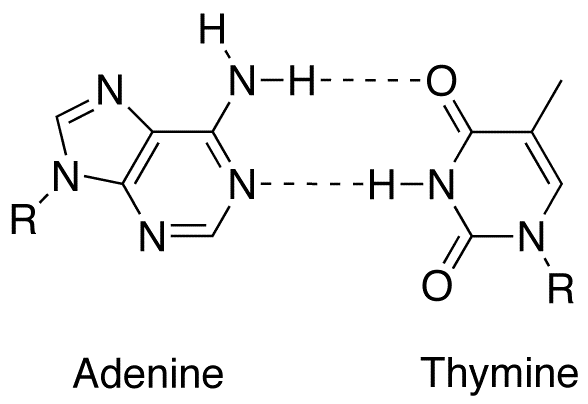
5-Bromouracil (5Bu) structure is similar to thymine (T) 


As you can see, A-5Bu base pairs does not cause mutation because it's structure is the same as A-T base pairs. 

However, when 5Bu can also pair with guanine. (When 5Bu change into enol form) 

Hence, causing AT to GC substitution. 


CHEMICAL MUTAGEN
Substances that can alter a base that is already incorporated in DNA by changing it's hydrogen bonding specificity. 


Nitrous acid act as mutagen where it alters adenine, A in which it pairs with C instead of T. 


RADIATION 

There are two types of radiation : 
  • Ionizing : High penetrating power, can kill cell if used in higher dose. 
  • Nonionizing : Kill about 90-95%. The remaining 5-10% are mutants. 
Mutations occurs when repairing the damaged DNA due to the radiations. 

DNA damage induced DNA repair system. 

SOS regulatory system initiates DNA repair processes. 

Damaged DNA due to UV. 


DNA repair processes. 
 
INTERCALATING AGENT 

Planar, 3-ringed molecules. 

Chemicals that are flat and look like bases where it can be inserted into bases. Pushing apart the original bases. 

Results in frameshift due to insertion or deletion of base pairs. 

For example, 

Acridine - intercalating agent


Deletion and insertion of bases. 

Lastly!! 

We can also identify mutants!! 

There are selectable mutants and nonselectable mutants. 

Selectable mutants are drug resistance. Meaning the mutants are antibiotic-resistant and can grow in the presence of antibiotic. 

#Antibiotic can kill the parent cell but not the mutated daughter cell.

Selectable mutants can be detected by two ways : 
  • Positive selection 
  • Negative selection 
POSITIVE SELECTION 

Rejecting unwanted parent cells.


Colonies in the medium with penicillin is mutants. 

NEGATIVE SELECTION 


Replica plating technique. 

Select cells that are unable to carry out certain functions. 

For example from the picture below, it will select cells that cannot synthesise trypotophan. Since the mutant is dependant to trytophan, when trytophan is not present it cannot grow. 

#Auxotroph is a mutant that have nutritional requirement that is absent in the parent cells. 


P/S I realised something. My suitable/best way of studying this is by looking at the pictures. I understand better when.... hmmm observing the picture... for an amount of time haha trying to see what's the difference of before and after reactions/understanding the mechanism, sort of. It suits me though.  So it is true I'm a visual type learners. x'D 


Sunday, November 16, 2014

Friday, 14th November 2014, "Somehow I don't feel like it's Friday"

We don't have morning class for Microbiology today!

And nope. It was not cancelled. It's even better. We went to Shah Alam Convention Center (SACC) today to support our classmates and seniors. They are currently participating in  competition for National University eLearning Carnival (NUCeL) 2014. 

Our classmates as well as Dr Wan have been burning the midnight oil for.... one week? Or maybe less? In order to finish preparing the posters, cards and videos since they are using Aurasma. 

Since Dr Wan said that we are going to depart from UPM by bus at 7a.m., she told us to be ready at the bus stop at 6.45a.m.

As the time goes by, it was 7.15a.m. already and the bus was still not in sight. And finally the bus arrived at about 7.45a.m. but we had to let the participants to get on the first bus. Me and the other classmates took the second bus. 

The irony was that when the second bus arrived first before the first bus. Apparently the bus driver got lost on his way. Poor the participants though! And also us... there.... at SACC... got clueless while trying to find the booths. Haha. 

An uncle(?) hehe I mean, a man asked us whether we are the participants or visitors. "Visitors." We said. And he said that if we're the participants, we have to go register first. "You guys come too early. Not a single booth is set up yet!" Hahaha. I have to agree on that. 

Everybody seemed busy too inside the hall. I feel like we were crowding the place due to to our big numbers and scattering everywhere in there or maybe even blocking the way of the people in there. I felt guilty x'D 

And we decided to sit at a cafe outside of the hall (while waiting for Dr Wan and the rest of the crews of "Bus 1" to arrive. 

After taking two to three group photos at the convention center, Dr Wan and the others finally arrived. Dr Wan asked to help the participants setting up their booths. 

And so we went inside the hall where the exhibition is going to be held today. But I didn't manage to help anything... To be honest x'D Because when I went to the booths, they are currently preparing the booths themselves. I don't think I can help anything. Like I said before, we were just crowding the booths instead which I really hope we were not being a nuisance to any of the other participants. 

Thus, we decided to go eat breakfast instead since most of us were hungry at that time. We went to the nearest mall which is the SACC Mall and Plaza Alam Sentral. We ate roti canai, tosai, fried noodle and fried rice. So, Dr Wan! I'm telling you, you don't have to be worried or feel.... guilty(?) there wasn't any food provided for us that morning. Because we all make sure we ate well! x'D :D 

Afterwards, we went back to SACC. Let's not forget the exhibition, people! :D
The first booth I went was of course, Megat-Choy-Chew-May Ling-Veronica's booth. Hehe :D Followed by the other seniors' booth. 

Our class's group did their poster and use Aurasma as their eLearning method. 

As for the other (senior) groups, they made cards with questions on it. In order to know the answers, we have to scan the card (using Aurasma) and the answer will be shown along with some notes about it. 

Other group also did an augmented reality book called "The Big Book of Microbe", if I'm not mistaken, that is. And they said that, instead of reading books like we usually do and sometimes we can even get sleepy or bored. This book can be scanned (also using Aurasma) and we can watch videos from the book, which is of course less boring. 

The other group did something called "The Box of Mixrobe" or was it "Microbe Box" haaaaa I'm really sorry Dr Wan, I forgot the name of their product T^T But it was interesting really! I have to admit that. The box contains microbe models (example : virus, yeast), a staining kit and also a CD which contains some sort of an interactive learning where there are questions, quizzes and slide notes about the topic of "Introduction To The Microbial World". What's interesting about the interactive learning is it is in the form of animation.

And lastly, the last group that I went to was the seniors who did on food studies. They prepared foods too! Since microbes usually can be found in foods like cheese and yogurts. Yogurt drinks were served and cheese sandwiches! I wanted to taste it, but I didn't. x'D It's regretful.

I did a few rounds of the exhibition and I think that the UPM students' booth were the most interesting. Hehehe. Maybe because it was handled by students so it looked more... lively? And fun? The other Also because they use very interesting methods and props like the Aurasma application, the microbe box and the augmented reality book. Overall they all did a very good job! I enjoyed listening to their presentations. 

We went back to UPM afterwards and had an evening class with Prof.

We started our class with quite a weather outside. It started to rain heavily. The wind was really strong. And Prof was worried if it was safe for us to continue our lecture. She hold the microphone on the "non-metal" part for safety measures. 

We learned about Regulation of Gene Expression today. 

1- Regulation of enzyme activity 

---->> Feedback inhibition : The end product will be the inhibitor when there are too many products. 

Allosteric inhibition 

2- Regulation of enzyme synthesis 

---->> Enzyme repression : Inhibit gene expression and decreases the synthesis of enzymes (proteins [end product]). 

---->> Enzyme induction : Turns ON the transcription of genes and synthesise the enzyme only when its substrate is present. 


Enzyme repression; Mediated by repressor 

OPERON 

Structure of operon 

Function of structure  

---->> Operon : A group of coordinately regulated structural genes with related metabolic functions. 

---->> Promoter : The region of DNA where RNA polymerase initiates transcription. 

---->> Operator : The region of DNA adjacent to structural genes that controls their transcription. 

---->> Regulatory genes : Codes for repressor proteins. 

trp Operon (Repression)

Trytophan LOW = ON ---- Trytophan HIGH = OFF

lac Operon (Induction)

Lactose PRESENT = ON ---- Lactore NOT PRESENT = OFF 

The production of proteins when glucose and lactose are present